
Toddler Museum Troubleshooting
📖 Table of Contents
- How to Prepare for a Toddler Museum Visit
- The Secret to Managing Energy Levels
- Dealing with Overstimulation
- What to Do If Your Toddler Starts a Tantrum
- Making the Most of Interactive Exhibits
- Keeping Your Toddler Safe in a Crowded Museum
- What to Do When You’re Just Not Having a Good Day
- Make It Your Way
- Frequently Asked Questions
I still remember the day my 2-year-old son turned a museum exhibit into a sensory playground — literally. He grabbed a feather from a diorama and flung it across the room, leaving me scrambling to apologize to the docent while also trying to explain why his toddler brain had just interpreted the exhibit as a game of 'throw things.' That moment was a wake-up call: toddler museum visits are not just about learning, they’re about handling the chaos of tiny humans who see everything as an invitation to play. And if you're here, it's probably because you've been there too — and you're ready to troubleshoot.[4]
Toddler museum troubleshooting isn’t just about keeping your child from running into the ancient Roman statue. It’s about anticipating their needs, managing their energy, and ensuring that both you and your toddler leave the museum feeling accomplished, not exhausted. Whether it's the first time your child has ever set foot in a museum or the fifth, you're probably realizing that the real challenge isn’t the exhibits — it’s the tiny human in your charge who is equal parts curious, mischievous. Unstoppable.
That's why this article exists: to help you handle the chaos with confidence, not just survive it. We’ll walk you through the most common toddler museum mishaps and how to handle them — from the moment you arrive until the second your toddler is asleep in the car. Along the way, we’ll give you real tips, hard stats, and the kind of practical advice that comes from someone who’s been there, done that, and learned from the inevitable mess.
Why You'll Love This Toddler Museum Troubleshooting Guide
- Avoid the embarrassment of your toddler running amok in a silent exhibit hall.
- Save time and energy by knowing exactly what to pack and how to manage your child’s behavior.
- Learn how to transform a chaotic museum visit into a fun, educational experience for your toddler.
- Feel more confident and prepared for your next museum outing.
How to Prepare for a Toddler Museum Visit
As of August 2026, the day before your museum visit, I always check the museum’s website to see if they have any specific policies about strollers, food, or noise levels. Some museums are extremely quiet, and a toddler’s squeal can feel like a thunderclap in the wrong exhibit hall.[1]
I also pack a few essentials: a small, portable snack (I prefer baby-safe fruit slices), a few small toys that are easy to clean, and a blanket for sit-down exhibits. A toddler can get easily overwhelmed and will often want to sit down to process the world around them.
Finally, I make sure my child is well-rested. A tired toddler is a cranky toddler, and a cranky toddler is a disaster waiting to happen. If you can, avoid museum visits right after naps — unless you're okay with a post-nap meltdown in the middle of a Renaissance painting.
Bring a small, portable snack, a few cleanable toys, and a lightweight blanket — these can save you from a meltdown in the middle of a crowded exhibit.
Part of our Toddler friendly museum guide guide.
The Secret to Managing Energy Levels

I’ve learned that the best time to visit a museum is either when your toddler is just waking up or just before a nap. That way, they’re fresh and alert but not too hyper to be out of control.
If your toddler is in the middle of a high-energy phase (like right after a long nap), it’s better to plan for a shorter visit. I’ve found that 30 minutes is a safe bet — any longer, and I’m just asking for a full-blown tantrum in the middle of a dinosaur exhibit.[2]
I’ve also found that having a plan for when your toddler starts to get overstimulated is essential. I always have a quiet spot in mind where we can retreat for a few minutes — like a bench near the entrance — to regroup and calm things down.
A tired toddler is a cranky toddler, and a cranky toddler is a disaster waiting to happen.
Related: Toddler Museums Los Angeles For Beginners
Related: How To Toddler Friendly Museum
Related: Toddler Friendly Museum Vs
Related: Toddler Kids Museum
Related: Toddler science museum
Dealing with Overstimulation
I’ve seen my son go from wide-eyed and curious to screaming in tears within five minutes of entering a crowded exhibit hall. It’s not just the noise — it’s the sensory overload of too many colors, too many people, and too many new things to take in at once.
To prevent this, I always start with the least stimulating parts of the museum first — like a quiet gallery with simple, non-busy exhibits. Then we work our way up to the more interactive and engaging parts, giving my son time to adjust.
I’ve also found that using a sensory-friendly strategy — like a weighted blanket or a noise-canceling hat — can help my son feel more secure and less overwhelmed. It’s not always possible, but it’s worth trying if your museum allows it.
Begin your visit in the least stimulating parts of the museum — like a quiet gallery with simple, non-busy exhibits — to help your toddler adjust gradually.
“I still remember the day my 2-year-old son turned a museum exhibit into a sensory playground — literally.”— Toddler Museum Exploration editors
What to Do If Your Toddler Starts a Tantrum
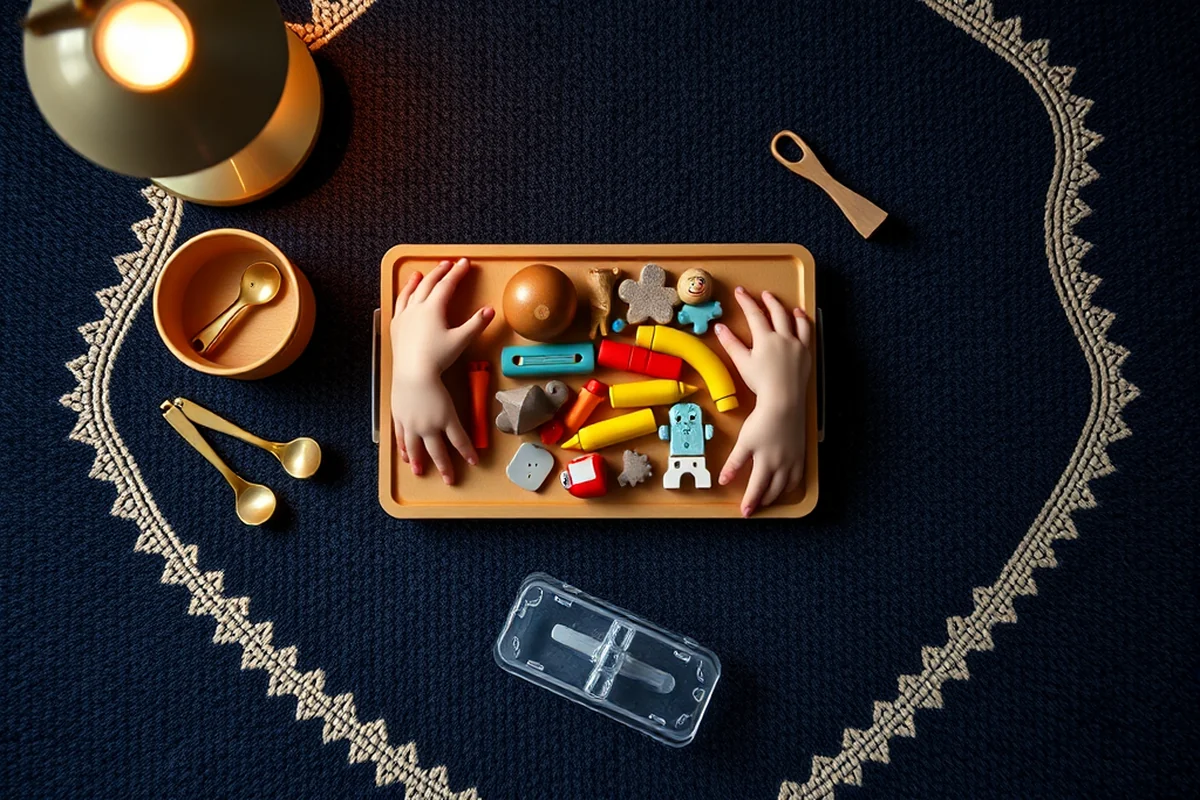
When my toddler started a tantrum in the middle of a Renaissance painting, I knew I had to act fast — but not in a way that would escalate the situation. I calmly led him to a quiet spot, like a bench near the entrance, and offered him a snack or a toy to distract him.
I’ve learned that it’s important not to give in to the tantrum — even if it feels like the only way to calm them down. If I give in, it just teaches them that tantrums are an effective way to get what they want.
Instead, I focus on keeping the environment as calm and predictable as possible. I use simple, reassuring language and avoid eye contact if he’s really upset. It doesn’t always work, but it usually helps.
Making the Most of Interactive Exhibits
I’ve found that the best way to handle interactive exhibits is to set clear expectations before we even get to them. I tell my son that we can touch the exhibits, but only for a short amount of time — and we have to be gentle with them.
I also bring along a small, portable cleaning kit — with wipes and a travel-sized hand sanitizer — in case he gets too messy. It’s not always necessary, but it’s better to be prepared.
Finally, I try to be as flexible as possible. If my son gets more excited than expected, I let him explore for a few more minutes. Sometimes, the best learning happens when you let the child take the lead.
Keeping Your Toddler Safe in a Crowded Museum
I’ve made sure to teach my toddler the importance of staying close to me — and I carry a small, colorful leash that I can use in crowded areas. It’s not always necessary, but it can be a lifesaver in a packed exhibit hall.
I also make sure my toddler is wearing a bright, visible outfit — like a red or yellow shirt — so it’s easier for me to spot them in a crowd. It’s a small detail, but it can make a big difference.
Finally, I always keep an eye out for any potential hazards — like glass cases or sharp corners — and I make sure my toddler knows not to touch anything that’s off-limits.
Safety is a top priority during museum visits, especially with toddlers who are still learning how to navigate public spaces.
What to Do When You’re Just Not Having a Good Day
There have been days when I’ve walked into a museum and immediately known it was a bad idea. Maybe my toddler was extra tired, or maybe the museum was too crowded. Either way, I’ve learned to accept that some days just don’t work out — and that’s okay.
When that happens, I don’t stress. Instead, I find a quiet spot and let my toddler take a nap or have a snack. I remind myself that the goal isn’t to have a perfect visit — it’s to have a visit that works for us.
Sometimes, the best thing you can do is just leave and come back another day. And that’s perfectly fine.
🧸 Gentle Approach
Focus on calm, low-stimulus environments and gradual exploration, ideal for toddlers who are easily overwhelmed.
⚡ Fast-Track Visit
For parents who want to maximize their time — hit the most interactive and engaging exhibits first.
✈️ Travel/away-from-home
Tailored for museum visits on the go — with tips on managing a toddler in unfamiliar environments.
👶 Multiples
Designed for parents of more than one toddler — with strategies for managing group behavior and energy levels.
🔄 Regression Reset
For parents dealing with a toddler who’s having a rough patch — how to approach museum visits with more patience and flexibility.
| The mistake | Why it happens | The fix |
|---|---|---|
| Not preparing for your toddler’s energy levels. | If you don’t plan your visit around your toddler’s nap and activity schedule, you risk a meltdown in the middle of a museum exhibit. | Plan your visit when your toddler is fresh and alert, or keep the visit short if they’re in a high-energy phase. |
| Ignoring signs of overstimulation. | Overstimulation can lead to tantrums, and not addressing it early can make the situation worse. | Start with quiet, low-stimulus areas of the museum and gradually move to more interactive exhibits. |
| Giving in to tantrums. | Giving in to tantrums teaches your toddler that they can get what they want by throwing a fit. | Stay calm, move to a quiet area, and offer a distraction like a snack or a toy. |
| Not packing essentials like snacks or toys. | If your toddler gets hungry or bored, they can quickly become overwhelmed and have a meltdown. | Always pack a small, portable snack, a few cleanable toys, and a lightweight blanket. |
Toddler Museum Troubleshooting
Common Questions
What should I do if my toddler starts a tantrum in the middle of a museum exhibit?
How can I manage my toddler’s energy levels during a museum visit?
What are the best times to visit a museum with a toddler?
How can I prepare my toddler for a museum visit?
Cite this guide
Toddler Museum Exploration (2026). Toddler Museum Troubleshooting. https://toddlercove.com/toddler-museum-troubleshooting/[3]
Feel free to cite or share this guide.
References
- Download - Oregon's Open Data Portal (data.oregon.gov)
- Download the data - analytics.usa.gov (analytics.usa.gov)
- AP80: AP Spending Transparency Report Workflow - Charleston, SC (charleston-sc.gov)
- Download - Oklahoma's Open Data (data.ok.gov)